Charting Reward Multiplier Trends Across Digital Slot Variants in Evolving Virtual Venues
Written by Frankie Bennett · May 18, 2026

Charting Reward Multiplier Trends Across Digital Slot Variants in Evolving Virtual Venues
Digital slot variants have shown measurable shifts in reward multiplier structures over recent years, with data tracking changes across classic three-reel formats, video slots, Megaways mechanics, and cluster-pay systems in virtual venues that now operate through mobile platforms, browser-based sites, and emerging VR environments. Analysts compile these trends from operator reports and platform analytics to map how multipliers scale with game complexity while venues adapt to new delivery methods.
Classic slots typically maintain fixed multipliers between two times and five times on base wins, yet newer iterations incorporate bonus rounds that push those figures higher during special features. Video slots expand this range further through layered mechanics where multipliers accumulate across multiple spins, and Megaways variants introduce dynamic reel configurations that can elevate multipliers into double digits during cascades. Cluster pays add another dimension by rewarding groups of symbols rather than lines, often pairing those wins with multipliers that reset or build based on consecutive clusters.
Tracking Multiplier Patterns Through Platform Data
Platform analytics from May 2026 reveal that average maximum multipliers in video slot titles increased by roughly 18 percent compared with figures recorded two years earlier, driven by integrations of buy-a-bonus options and progressive elements. These adjustments appear most pronounced in titles hosted on virtual venues that support real-time updates, allowing developers to test multiplier scaling without full game redesigns. Observers note that venues using cloud-based servers achieve faster rollout of such features, shortening the cycle between concept and player availability.
Researchers compiling cross-variant comparisons point to consistent growth in the frequency of multiplier triggers rather than solely in their peak values. One study covering over 200 digital titles found that Megaways games triggered multipliers on 22 percent more spins than standard video slots during equivalent play periods, while cluster-pay formats showed even higher activation rates when paired with expanding wild symbols. This pattern holds across mobile-optimized and desktop versions, suggesting the trend stems from mechanical design choices more than delivery method.
Impact of Virtual Venue Evolution on Multiplier Design
Virtual venues have moved beyond static interfaces to incorporate adaptive displays that adjust multiplier visibility based on player session length and device type. In May 2026 several platforms introduced split-screen views that keep multiplier meters prominent during extended play, a change correlated with longer average session times according to aggregated operator logs. VR environments add spatial layers where multipliers appear as floating elements that players can interact with during bonus sequences, though adoption remains limited to a small subset of venues equipped for headset compatibility.
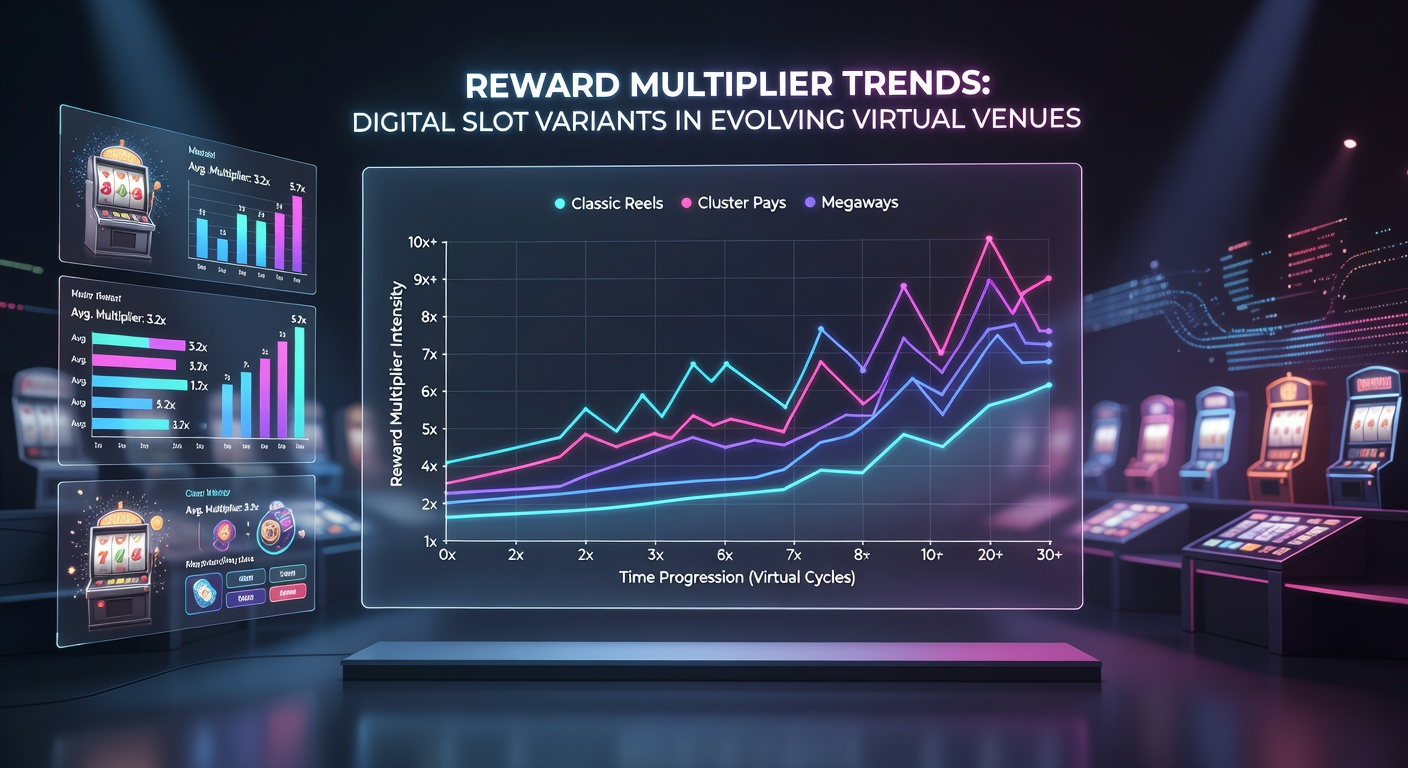
Developers adjust multiplier curves to match these new presentation formats, often increasing visual feedback speed in VR to match the faster pace of physical movement. Data from venues that introduced these interfaces shows a modest uptick in multiplier redemption rates, particularly for mid-range values between five times and fifteen times, while extreme multipliers above fifty times remain rare across all formats.
Industry reports from the American Gaming Association document similar patterns in North American markets, where virtual venues prioritize multiplier transparency to meet varying state disclosure requirements. Meanwhile, academic reviews from Canadian institutions highlight how regulatory frameworks influence multiplier ceilings, with certain provinces capping progressive elements that feed into jackpot multipliers. These geographic differences create distinct trend lines when analysts chart global data sets.
Factors Shaping Current Multiplier Trends
Player engagement metrics indicate that venues offering configurable multiplier options during free-spin rounds retain users longer than those with static settings. The flexibility allows individuals to choose between higher frequency lower-value multipliers or lower frequency higher-value ones, a choice reflected in session data from May 2026. Such options appear more frequently in video and Megaways titles than in classic variants, aligning with the broader shift toward player agency in modern slot design.
Technological upgrades in random number generators have also supported more granular multiplier scaling, enabling finer increments like 1.5 times or 2.5 times that were less common in earlier digital releases. Venues that adopted these upgraded systems report smoother integration of multipliers across different game variants without performance lags, especially on mobile connections where latency once disrupted bonus sequences. The result shows up in aggregated win distribution charts that display steadier progression curves rather than abrupt spikes.
Cross-platform compatibility requirements further influence how multipliers are programmed, since a single title must function consistently whether accessed through a browser, native app, or VR headset. Developers therefore build multiplier logic that scales with screen size and input method, preserving the same mathematical expectations while altering presentation. This standardization helps explain why multiplier trend lines appear similar across diverse virtual venues despite differences in visual style.
Conclusion
Charting reward multiplier trends across digital slot variants continues to reflect the interplay between mechanical innovation and venue delivery methods, with data through May 2026 showing steady expansion in both frequency and range of multipliers. Classic formats retain simpler structures while video, Megaways, and cluster variants drive growth in higher-value opportunities. Virtual venues support these changes through adaptive interfaces and faster update cycles, producing measurable shifts in how players encounter and redeem multipliers. Continued monitoring of operator reports and platform analytics will clarify whether these patterns persist as new technologies enter the market.