How Sequential Alerts Sustain Extended Play in Mobile Live Dealer Environments
Written by Frankie Bennett · Jun 20, 2026
How Sequential Alerts Sustain Extended Play in Mobile Live Dealer Environments
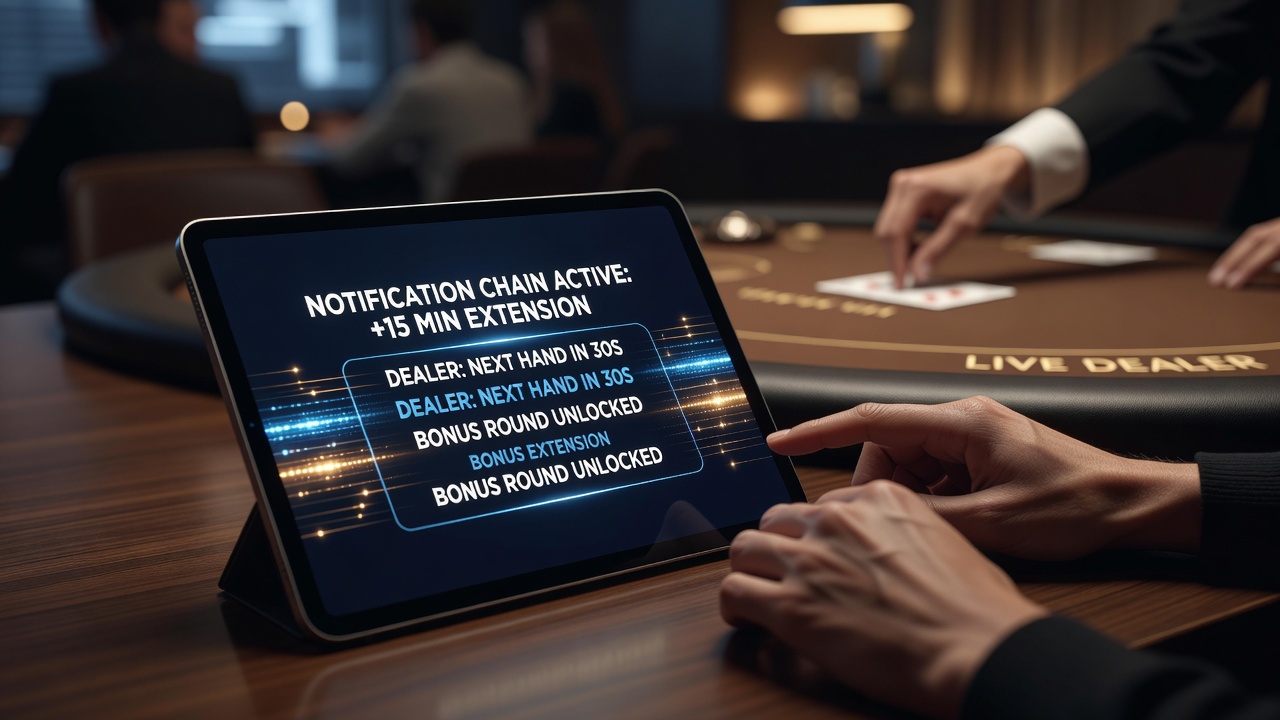
Portable live dealer platforms rely on carefully timed notification sequences to maintain user presence across extended periods, and operators design these chains to trigger additional logins through reminders, offers, and status updates that build directly on prior activity. These sequences operate by analyzing session data in real time, then dispatching follow-up alerts at intervals calculated to coincide with typical break points in play.
Mechanics of Notification Chains
Notification chains function as linked messages where each alert references elements from the previous interaction, such as a dealer’s comment or an ongoing table result, which creates continuity that encourages immediate return to the same environment. Research from the National Council on Problem Gambling indicates that such chained messaging increases session frequency by linking emotional cues from live tables to subsequent device prompts. Developers program these sequences to escalate in urgency when inactivity thresholds are crossed, moving from neutral table updates to personalized incentives within minutes.
Timing algorithms adjust based on user patterns observed across thousands of sessions, and they incorporate factors like time zones, device battery levels, and historical response rates to optimize delivery windows. One study tracking mobile engagement patterns found that alerts arriving within 12 to 18 minutes after logout produced the highest re-engagement rates, while messages sent after longer gaps showed diminished returns.
Role in Extending Session Duration
Extended play cycles emerge when initial notifications successfully prompt a return, after which follow-up messages reinforce continued participation through progressive content that references the user’s current table position or accumulated rewards. Operators track metrics such as average session length and return latency, then refine chain length accordingly; chains that exceed four sequential alerts have been observed to correlate with sessions stretching beyond 90 minutes on average. Data collected through app analytics platforms shows that users exposed to these layered prompts complete more hands per visit compared to those receiving single, isolated notifications.
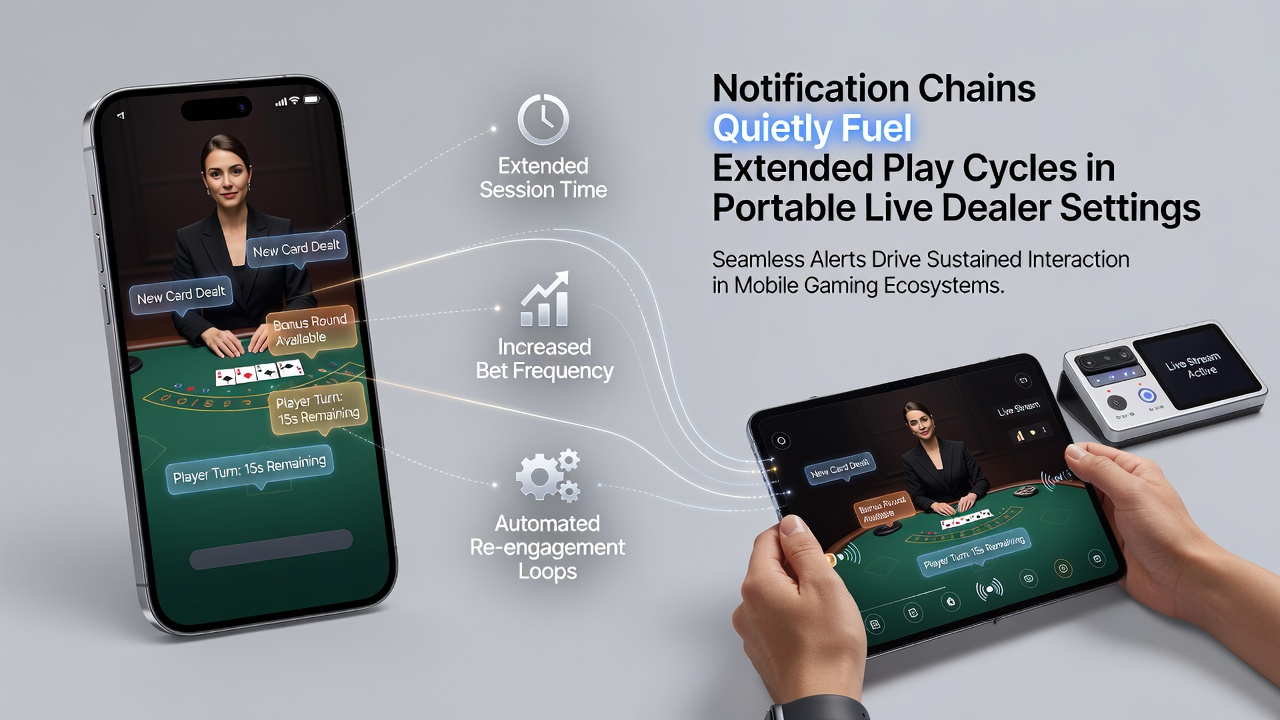
Personalization draws from dealer interactions and game outcomes stored in user profiles, allowing each alert to reference specific elements like a near-miss on a roulette spin or a dealer’s greeting from the prior round. This approach maintains narrative flow across disconnected sessions, and it reduces the cognitive effort required for players to resume activity. Industry reports compiled in June 2026 by gaming analytics firms documented a 27 percent rise in repeat logins among users receiving context-aware chains versus generic promotional blasts.
Technical Implementation Across Devices
Cross-platform frameworks enable consistent chain delivery on both iOS and Android environments, with push services managing delivery even when applications remain closed. Background processes monitor connection status and queue messages for immediate transmission once connectivity resumes, which prevents gaps in the sequence that could break engagement momentum. Developers integrate geolocation and local time data to avoid sending alerts during periods of documented low responsiveness, such as early morning hours in specific regions.
Testing protocols involve A/B comparisons of chain variants, measuring metrics including click-through rates and subsequent time spent at live tables. Results from these tests guide adjustments to message tone, frequency, and content depth, ensuring the sequence remains effective without triggering user fatigue that leads to notification disabling.
Measurement and Performance Indicators
Performance tracking relies on aggregated session data rather than individual identification, with key indicators including total hands played after notification receipt and average interval between logins. Figures released by the Canadian Centre on Substance Use and Addiction in early 2026 revealed that mobile live dealer applications utilizing multi-stage alert systems recorded higher daily active user retention rates over 30-day periods. These measurements help operators calibrate chain intensity while maintaining compliance with regional standards on digital communications.
Conclusion
Notification sequences in portable live dealer settings operate through interconnected alerts that reference ongoing activity and past outcomes, thereby supporting longer and more frequent engagement periods. Technical refinements continue to evolve based on performance data gathered across diverse device ecosystems, while measurement frameworks provide operators with precise indicators of sequence effectiveness. These systems remain central to how mobile platforms sustain continuous participation cycles in live dealer environments.