Mapping Unexpected Rewards Against Live Interaction Patterns in Portable Gaming Systems
Written by Jonas Bennett · Aug 30, 2026
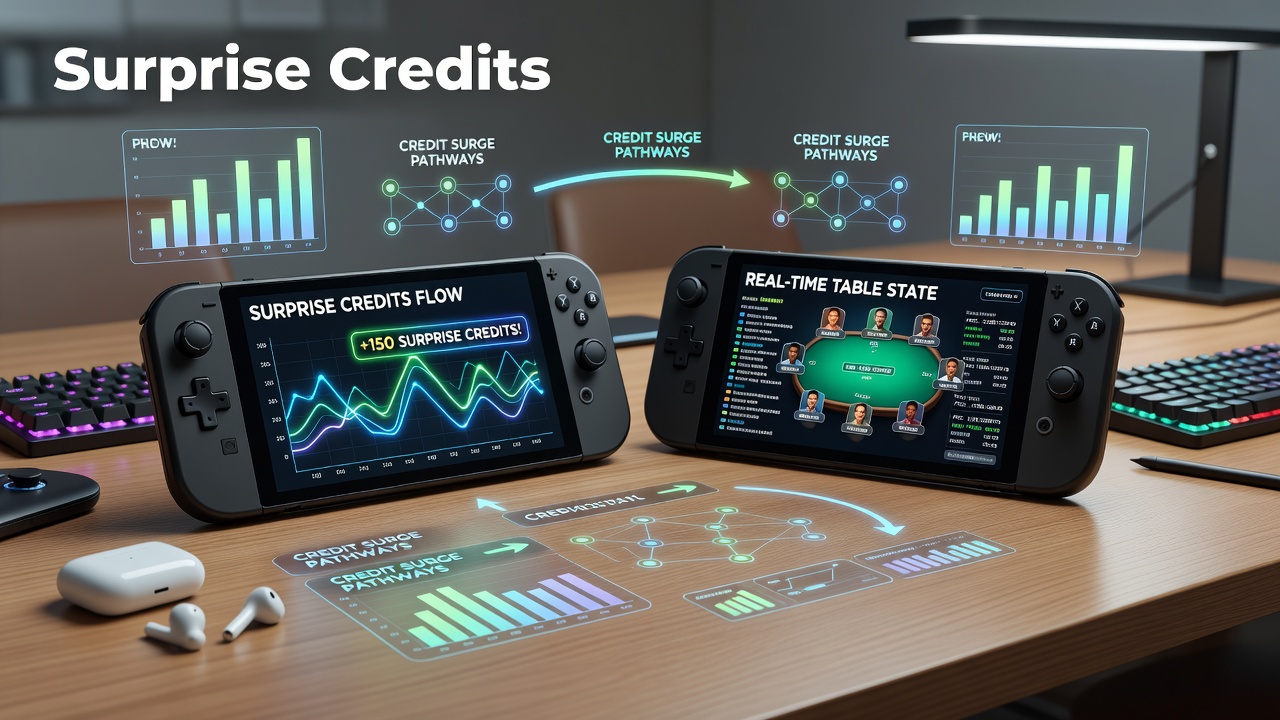
Mapping Unexpected Rewards Against Live Interaction Patterns in Portable Gaming Systems
Handheld gaming platforms continue to integrate surprise credits with live table mechanics in ways that reshape player engagement across mobile and tablet devices, and developers track these elements through detailed analytics that capture timing, frequency, and impact on session length. Data compiled by research groups in North America and Europe show that credits delivered at unpredictable intervals often align with peak activity periods at virtual tables, creating measurable shifts in how participants manage their in-game resources during extended play sessions.
Core Mechanics Driving Credit Delivery
Surprise credits function as automated rewards triggered by algorithms that monitor player behavior patterns, device sensors, and network conditions, while real-time table dynamics rely on synchronized servers that update card distributions, betting rounds, and opponent actions within fractions of a second. Observers note that handheld environments introduce additional variables such as touch latency, battery levels, and background app interruptions, all of which influence how these two systems interact. Studies conducted at several technical universities indicate that credit notifications appearing during active betting phases tend to extend average session durations by measurable percentages compared with those delivered during idle moments.
Engineers design these systems to balance computational load on portable hardware with seamless updates, and middleware layers handle the synchronization required to prevent desync events between credit balances and table states. Figures released by the Canadian Gaming Association reveal that handheld titles incorporating both features report higher retention rates in markets where regulatory frameworks permit such mechanics, with data collected through August 2026 showing consistent patterns across multiple device manufacturers.
Device Constraints and Synchronization Challenges
Portable hardware imposes strict limits on processing power and memory allocation, which forces developers to optimize the timing of credit awards so they do not compete with the constant data streams required for live table rendering. Those who analyze performance logs find that devices with higher refresh rates maintain tighter alignment between credit updates and table events, whereas older models exhibit occasional delays that alter player decision windows. Industry reports from the Australian Interactive Games Association document cases where optimized code reduced such delays by up to forty percent, allowing surprise credits to land more precisely within ongoing rounds.
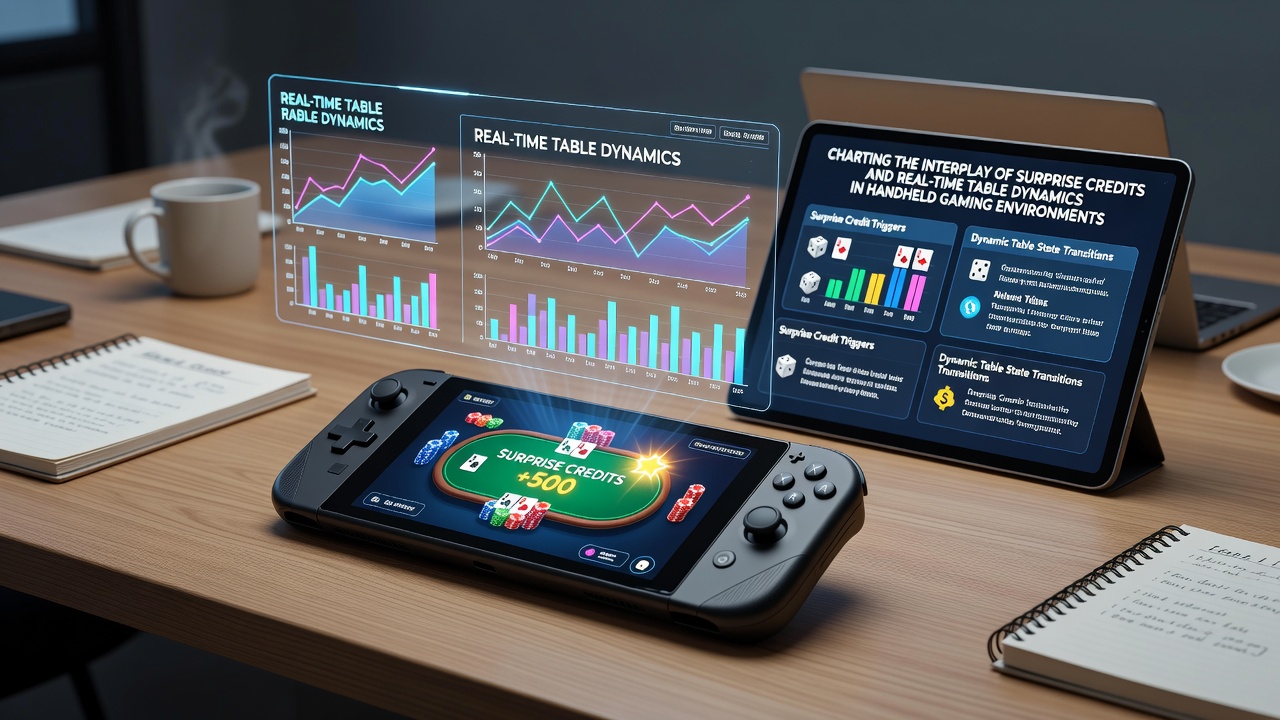
Network variability adds another layer, since handheld users frequently switch between Wi-Fi and cellular connections during a single session. Research published by the IEEE Computer Society demonstrates that adaptive buffering techniques help preserve table state integrity even when credit packets arrive out of sequence, and developers continue to refine these methods as 5G coverage expands in urban centers worldwide.
Player Behavior Patterns Across Regions
Analytics platforms collect anonymized telemetry that highlights regional differences in how participants respond to combined credit and table features, with users in densely populated Asian markets showing quicker adaptation to rapid credit injections during high-stakes table phases. European datasets, by contrast, indicate steadier engagement curves when credits appear during lower-intensity intervals between rounds. A joint study from the University of Melbourne and the Technical University of Denmark examined over two million sessions and found that the interplay produces distinct retention signatures depending on time of day and device type.
Regulatory environments in various jurisdictions shape the parameters within which these systems operate, and compliance teams monitor for unintended effects on play speed or resource management. Data aggregated through mid-2026 by independent research firms show gradual convergence in design approaches as hardware capabilities improve across price tiers.
Future Development Directions
Engineers explore machine-learning models that predict optimal credit delivery windows based on individual table activity histories, and early implementations suggest potential improvements in synchronization accuracy. Hardware manufacturers continue to release chips with enhanced graphics and networking pipelines that reduce the overhead of maintaining both systems simultaneously. Observers tracking patent filings note increased activity around methods that allow credits to influence table parameters dynamically without violating platform stability rules.
Cross-platform frameworks now support unified APIs for credit and table management, which simplifies deployment across diverse handheld ecosystems. Reports from global trade organizations highlight ongoing collaboration between software studios and device makers to standardize performance benchmarks that account for these combined features.
Conclusion
The documented relationship between surprise credits and real-time table dynamics in handheld environments rests on measurable technical and behavioral data collected across multiple regions and device generations. Continued refinement of synchronization methods, informed by academic and industry research, supports stable operation while preserving the distinct timing elements that define each component. As hardware and network infrastructure evolve through 2026 and beyond, the interplay remains a focal point for performance optimization and user-experience analysis.