Mobile Credits Reshaping Player Routines Across 24-Hour Windows at Digital Gaming Platforms
Written by Drew Russell · Aug 27, 2026

Mobile Credits Reshaping Player Routines Across 24-Hour Windows at Digital Gaming Platforms
Online gaming platforms have introduced mobile-exclusive credits in recent years, and these incentives appear to alter how users structure their time around play sessions. Data from industry tracking services show that players who receive app-only rewards often log in at consistent intervals throughout the day rather than during single extended periods. Researchers at several academic centers note that these credits frequently tie to specific hours, which encourages shorter but more frequent visits that align with commute times, lunch breaks, and evening wind-down periods.
Figures released in August 2026 by a North American research consortium indicated that sites offering mobile credits saw average daily sessions rise by 22 percent compared with desktop-only promotions. The same report highlighted that engagement spikes occurred between 7 a.m. and 9 a.m. as well as 5 p.m. and 7 p.m., times when mobile usage traditionally peaks for many adults. Observers note that the credits themselves carry time-limited redemption windows, which further compresses activity into predictable daily rhythms.
Patterns Emerging in Morning and Afternoon Windows
Morning engagement cycles have shifted noticeably once mobile credits entered the picture. Players often open apps during the first commute of the day to claim credits that expire within a few hours, and this behavior creates an initial burst of activity that sometimes carries into mid-morning breaks. Studies conducted by university teams in Australia found that users who activate these credits before 10 a.m. tend to return for a second shorter session around lunch, whereas desktop users without such prompts show flatter activity curves.
Afternoon patterns follow a similar logic. Credits released at 2 p.m. or 3 p.m. draw users back during work breaks or school pickup times, and the effect compounds when those credits can be combined with small deposit matches available only through the app. Analysts at a Canadian gaming research group documented that platforms using staggered mobile credit drops recorded steadier traffic between 1 p.m. and 4 p.m. than sites relying solely on evening promotions.
Evening Cycles and Overnight Adjustments
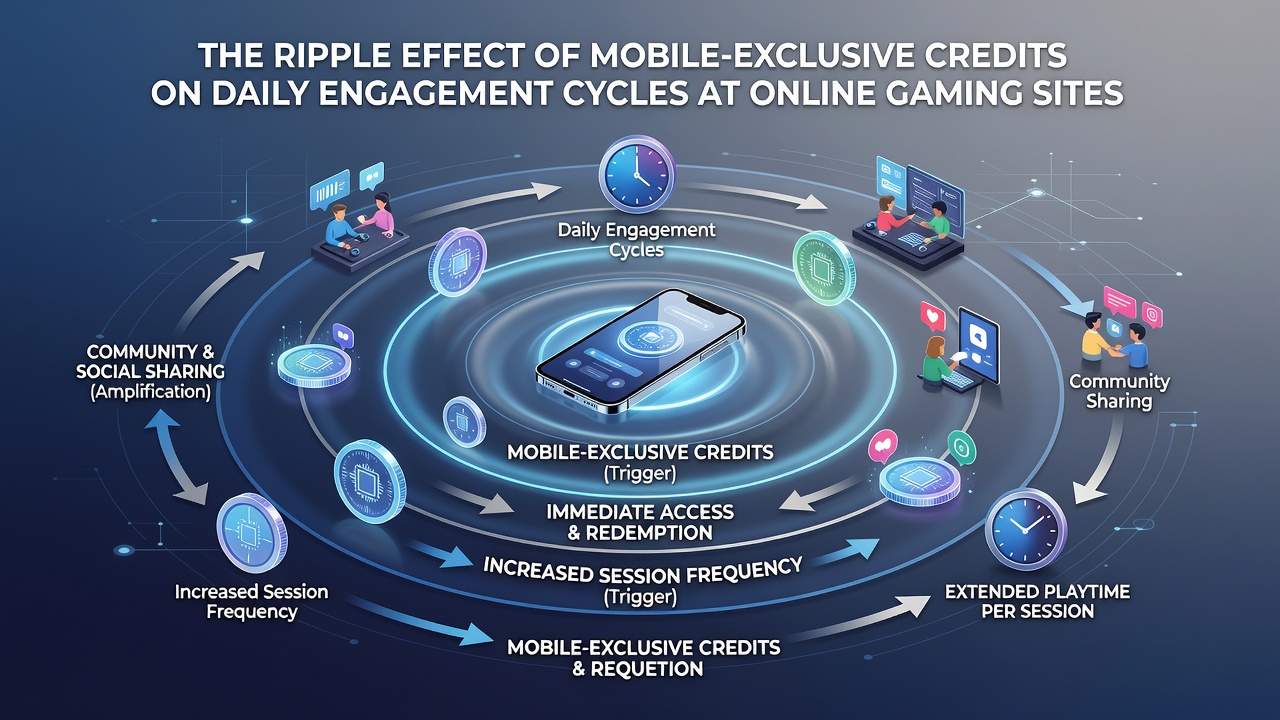
Evening windows remain the heaviest period for overall volume, yet mobile-exclusive credits have introduced finer segmentation within those hours. Credits activated between 8 p.m. and 10 p.m. often prompt users to extend sessions that might otherwise end after dinner, while later drops near midnight encourage a smaller but dedicated group to stay active into the early morning. European regulatory filings from 2025 and 2026 show that operators who publish transparent schedules for these credits experience more predictable server loads and fewer sudden traffic spikes.
Overnight engagement has also changed for certain demographics. Data collected by an independent analytics firm in Singapore revealed that mobile credit users aged 25 to 34 logged brief sessions between 11 p.m. and 1 a.m. at higher rates than previous years, largely because credits carried short validity periods that aligned with late commutes or wind-down routines. These micro-sessions rarely exceeded fifteen minutes yet contributed measurable lifts in daily retention metrics.
Cross-Platform Comparisons and Retention Metrics
Platforms that maintain both mobile and desktop offerings provide clear comparison points. When credits remain mobile-exclusive, desktop traffic during the same hours shows little corresponding increase, which suggests the credits function as a genuine channel-specific driver rather than a general site-wide boost. A 2026 report from a U.S.-based gaming association tracked one operator that moved 35 percent of its daily reward budget to mobile-only credits and recorded a 17 percent rise in seven-day retention among users who claimed those credits at least three times per week.
Those same datasets indicate that users who receive mobile credits also exhibit different spend patterns, often spreading smaller deposits across multiple sessions instead of concentrating larger amounts in single visits. Regulatory summaries from Australian authorities have noted similar trends in markets where time-bound mobile rewards are common, although the reports stop short of attributing causation.
Conclusion
Mobile-exclusive credits continue to influence the timing and frequency of player activity on digital gaming sites. Available figures point to more segmented daily cycles, with distinct morning, afternoon, and evening clusters tied directly to credit release and redemption windows. As operators refine these programs, further shifts in engagement rhythms may emerge, and ongoing data collection from multiple regions will help track those developments through the remainder of 2026 and beyond.