Off-Peak Credit Activations Transform Player Experiences at Virtual Card Tables
Written by Drew Russell · Jun 25, 2026

Off-Peak Credit Activations Transform Player Experiences at Virtual Card Tables
Data from multiple online gaming platforms shows that surprise credits, which activate automatically during off-peak periods, have begun to reshape how participants approach virtual card tables, and these shifts appear most pronounced between 2 AM and 6 AM in major time zones.
Operators report that credits often appear as small balance additions or free hands at blackjack and baccarat tables when traffic drops below certain thresholds, and this timing encourages players who normally log in during peak evening slots to experiment with different session lengths.
How Activation Mechanics Work Across Platforms
Systems track real-time player volume at virtual tables and trigger credits when occupancy falls under preset levels, while algorithms factor in individual account history to determine credit size and type. One operator documented a 27 percent rise in off-peak logins after implementing these triggers in early 2025, and similar patterns emerged in subsequent quarterly reviews.
Players receive notifications within the game interface rather than through separate emails, which keeps the experience contained inside the session, and this approach reduces friction for those already seated at tables. Research conducted by the University of Nevada's gaming studies group indicates that such seamless delivery correlates with longer average session durations during low-traffic windows.
Changes in Player Movement and Session Timing
Analytics platforms tracking clickstream data reveal that participants who once concentrated activity between 8 PM and midnight now split their time more evenly across quieter hours, and many extend sessions when credits appear mid-hand. This redistribution creates steadier table occupancy instead of sharp spikes followed by long lulls.
Figures released by the European Gaming and Betting Association in its 2025 annual report highlight a 19 percent increase in cross-time-zone play, where users from different regions overlap during what used to be dead periods. Observers note that the presence of surprise credits acts as an anchor, keeping tables populated even when natural demand would otherwise decline.
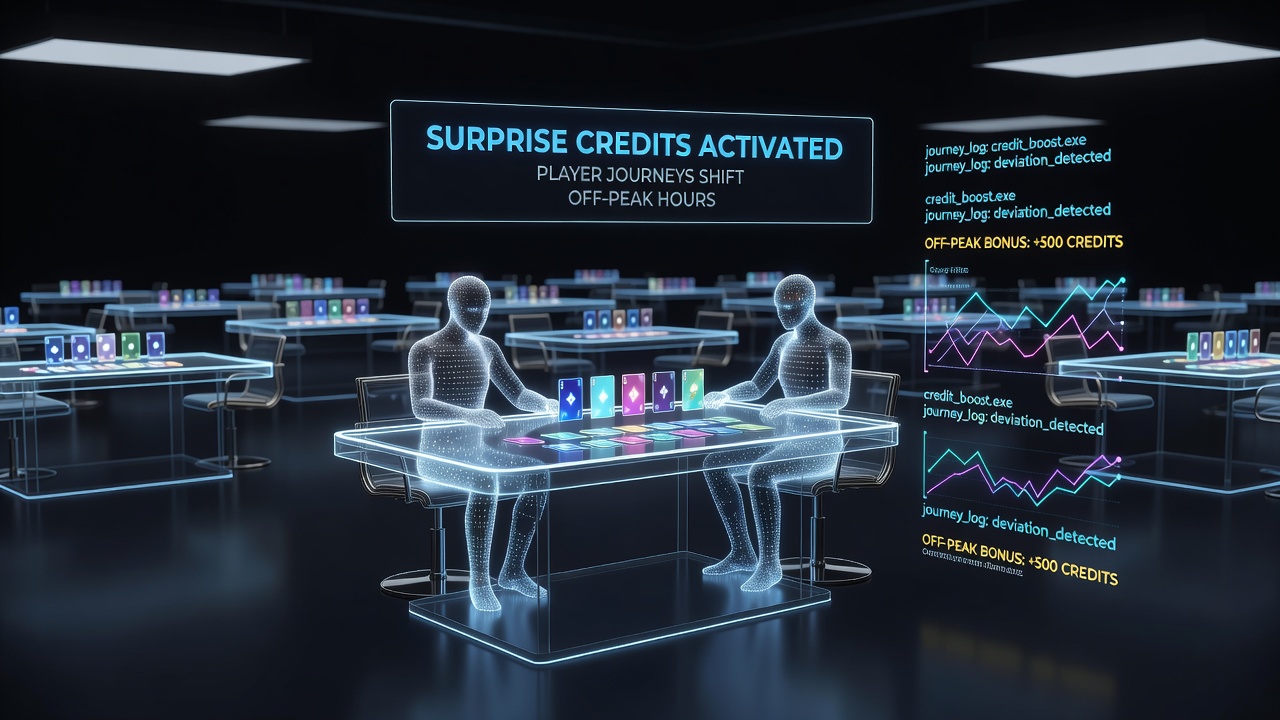
Case examples from platform dashboards illustrate individual journeys where a player logs in at 3 AM expecting a short session, receives a credit after twenty minutes, and stays for another hour, and aggregate data confirms these extensions occur across thousands of accounts weekly. June 2026 records from several major sites show consistent month-over-month growth in off-peak engagement following credit rollouts.
Technical Triggers and Compliance Considerations
Developers integrate credit logic directly into table servers so that activation happens without separate bonus engines, and this reduces latency while maintaining audit trails required by licensing jurisdictions. Regulatory filings from Australian state authorities describe similar mechanisms used to stabilize revenue during overnight hours without violating advertising restrictions.
Security protocols ensure credits apply only to verified accounts that meet minimum age and location checks, and logs capture every activation event for later review. Those who've examined the backend code note that thresholds adjust seasonally, responding to patterns observed in previous years.
Broader Effects on Table Dynamics
Dealer avatars and automated systems experience steadier workloads when credits pull additional players into off-peak tables, and this consistency improves training data for AI opponents used in practice modes. Studies from the American Gaming Association tracking digital table performance show reduced variance in hand volume across 24-hour cycles after credit systems launched.
Players often migrate between different card variants once credits appear, testing new tables they might otherwise skip, and this exploration widens the range of games that maintain minimum occupancy. Platform heat maps from mid-2026 indicate fewer empty seats during traditionally quiet shifts compared with pre-credit baselines.
Conclusion
Activation of surprise credits during off-peak hours continues to influence how participants navigate virtual card tables, with measurable effects on login timing, session length, and game variety. Ongoing data collection from multiple regions will determine whether these patterns stabilize or evolve further as operators refine their trigger parameters.