Shifting Reward Dynamics Tied to Seasonal Player Migrations Across Britain's Licensed Digital Gaming Networks
Written by Jonas Bennett · Jun 4, 2026
Shifting Reward Dynamics Tied to Seasonal Player Migrations Across Britain's Licensed Digital Gaming Networks
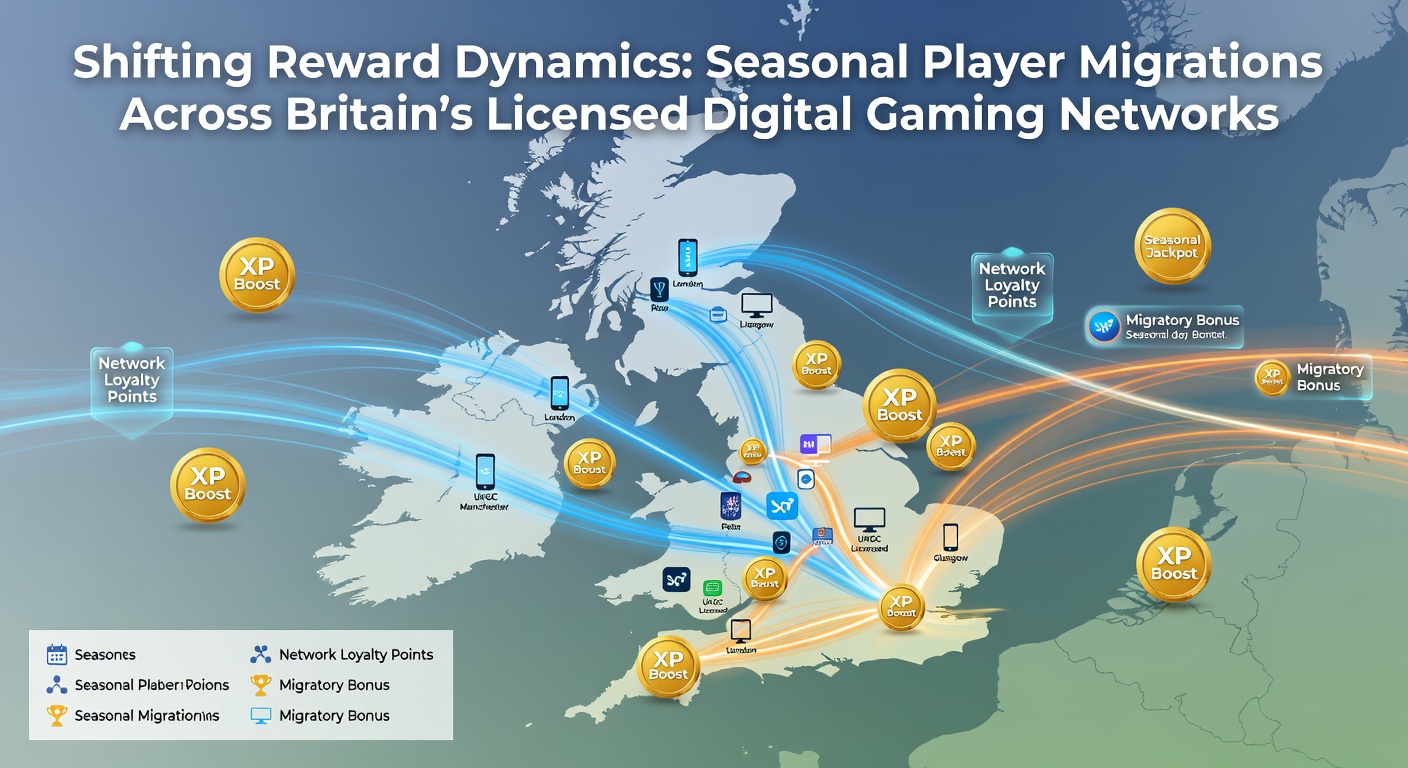
Seasonal player migrations have emerged as a defining feature of Britain's licensed digital gaming networks, where activity levels fluctuate in response to holidays, weather shifts, and travel patterns. These movements alter how reward systems operate, since operators adjust bonus structures, loyalty tiers, and incentive cycles to match changing participation rates. Data collected through 2025 into June 2026 shows consistent spikes in mobile-based play during summer months, while desktop sessions rise during winter periods when users remain indoors for longer stretches.
Patterns in Player Movement Across Networks
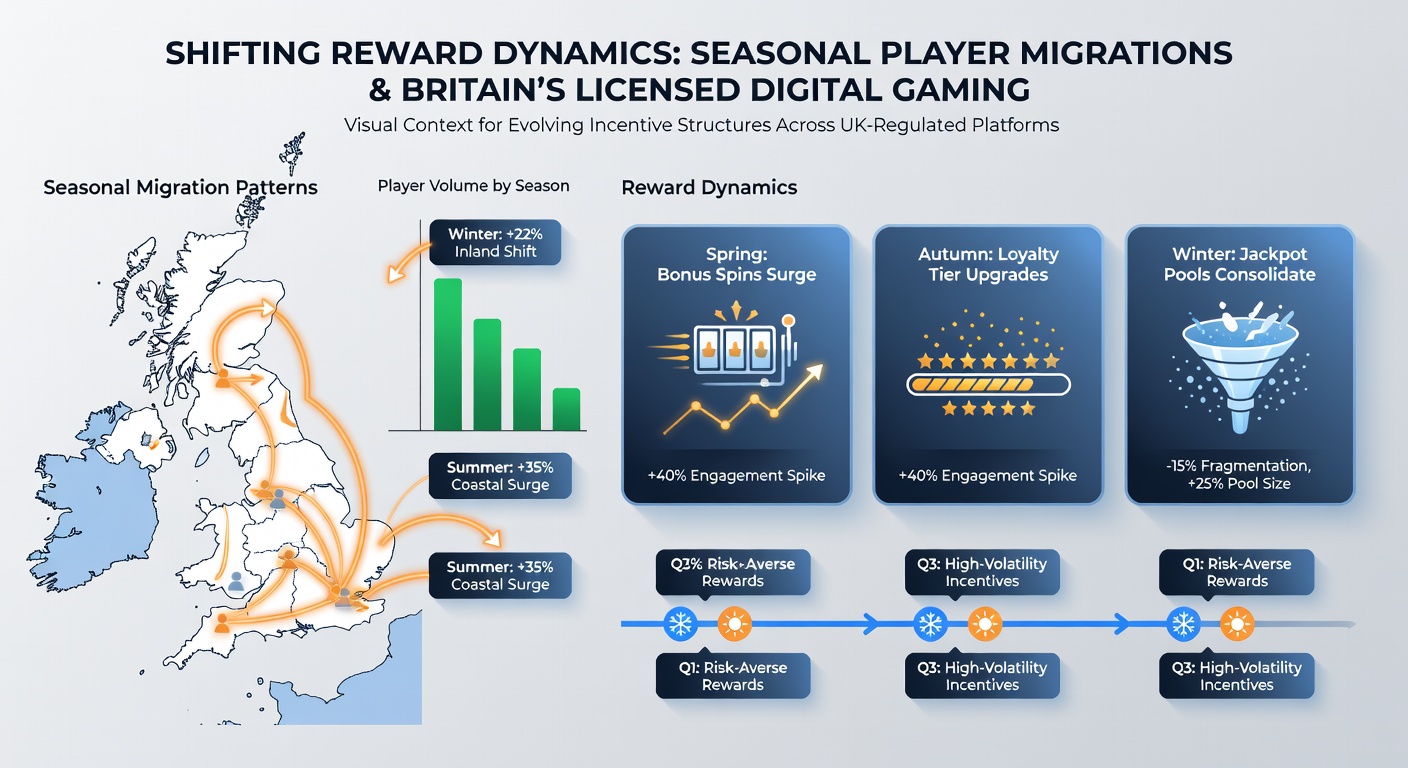
Observers tracking licensed platforms note that users often transition between game categories and device types as seasons change, with summer months drawing increased engagement toward quick-session mobile titles whereas winter drives longer sessions on table games and live dealer formats. These shifts occur because players adapt their habits to available time and setting, which in turn influences how reward multipliers and deposit incentives are calibrated across different networks. Research from the University of Nevada's International Gaming Institute indicates that such migrations follow predictable annual cycles tied to school holidays and major sporting events, creating ripple effects on overall platform traffic and reward distribution.
Operators respond by recalibrating their systems so that loyalty points accumulate at different rates depending on the time of year and the volume of cross-category play. For instance, networks have introduced variable cashback percentages that increase during low-traffic periods to retain users who might otherwise migrate to competing platforms. The result appears in aggregated figures showing higher redemption rates for seasonal bonuses precisely when migration peaks occur.
How Reward Structures Adapt to Migration Flows
Reward mechanics evolve directly in response to these flows, with many licensed networks implementing time-bound multipliers that activate during expected migration windows. Summer campaigns often feature accelerated progress toward tier upgrades for mobile users, while autumn adjustments emphasize retention bonuses for those returning after holiday breaks. According to reports compiled by the Australian Gambling Research Centre, similar adaptation patterns in other regulated markets demonstrate that flexible reward timing reduces churn by aligning incentives with actual player availability rather than fixed calendar dates.
Because migrations concentrate activity in particular segments, operators have refined segmentation tools that track device preference alongside seasonal timing. This allows networks to deliver targeted free-play credits or deposit matches only to cohorts showing the strongest migration signals. Figures from platform analytics in early 2026 reveal that such precision targeting lifts average session length by measurable margins during transition months like May and September.
Data Trends Observed Through Mid-2026
Analytics covering the first half of 2026 highlight that migration intensity peaked in June, coinciding with school holidays and warmer weather encouraging outdoor schedules yet still leaving evening hours for shorter mobile sessions. Networks reported elevated uptake of instant-reward features during these weeks, while longer-form loyalty programs saw steadier but slower growth. Those monitoring cross-network activity note that users frequently maintain accounts on multiple licensed sites and rotate between them based on which platform offers the most relevant seasonal incentive at any given moment.
Payment and withdrawal patterns also shift alongside these migrations, with faster payout options gaining preference during high-mobility periods when players seek quicker access to funds. Industry reports compiled across European markets show parallel movements, suggesting the phenomenon extends beyond Britain yet manifests uniquely within the constraints of local licensing frameworks.
Operational Adjustments by Licensed Networks
Licensed operators have invested in backend systems capable of real-time adjustment to reward parameters, allowing them to scale bonus availability up or down according to live migration data. This includes dynamic loyalty point conversion rates that favor categories experiencing influxes while gently tapering incentives in oversaturated segments. Case studies shared at industry forums describe how one network group synchronized its summer mobile campaign with cricket season scheduling, resulting in sustained engagement across previously underutilized afternoon time slots.
Staff training programs now incorporate modules on interpreting seasonal data streams, ensuring compliance teams and marketing departments coordinate when rolling out adjusted reward offers. These internal processes help maintain consistency across Britain's licensed environment even as external factors such as weather or public events trigger rapid player movement.
Conclusion
Seasonal player migrations continue to reshape reward dynamics within Britain's licensed digital gaming networks by compelling operators to refine timing, segmentation, and incentive structures. The patterns observed through June 2026 underscore the importance of responsive systems that track movement across devices and game types. As data collection improves, networks gain clearer insight into how these recurring cycles influence participation, allowing for increasingly precise calibration of rewards that align with actual user behavior rather than static assumptions.