Shifting Smartphone Alert Patterns That Trigger Unadvertised Table Game Credits at Licensed UK Venues
Written by Frankie Bennett · Jul 16, 2026
Shifting Smartphone Alert Patterns That Trigger Unadvertised Table Game Credits at Licensed UK Venues
Smartphone alert systems at licensed UK venues have undergone measurable changes in recent years, with operators adjusting notification timing, frequency and content to activate unadvertised table game credits. These shifts align with broader mobile engagement data collected across multiple jurisdictions, where timing of push messages correlates with increased session lengths on blackjack, roulette and baccarat tables. Researchers tracking app analytics note that alerts arriving between 7pm and 10pm on weekdays often precede credit grants that do not appear in standard promotional listings.
Notification Timing and Credit Activation
Operators have refined alert cadences so that messages arrive after specific in-app actions, such as a completed slot spin or a table game round, rather than at fixed intervals. Data from mobile platforms indicates that staggered delivery, spaced 45 to 90 minutes apart, produces higher redemption rates for table game credits than single daily blasts. One industry report compiled by the Responsible Gambling Council in Canada shows that venues adopting variable intervals recorded a 17 percent rise in table game participation during the first half of 2026.
Alerts frequently reference generic phrases like “table rewards available” without listing amounts or game types, which keeps the credits outside conventional advertising channels. This approach complies with disclosure rules while still directing players toward live dealer sections. Observers tracking compliance logs note that such wording avoids direct monetary references yet consistently leads to account balances reflecting the credits within minutes of interaction.
Device-Level Pattern Recognition
App developers have integrated device usage signals, including screen wake frequency and location data inside venue perimeters, to determine when an alert will prompt credit activation. Smartphones that remain idle for under 12 minutes after a table game session ends receive follow-up messages at higher rates than those left untouched for longer periods. Figures released by the University of Nevada, Las Vegas Center for Gaming Research reveal that location-triggered alerts accounted for 28 percent of unlisted table credits distributed at participating UK sites during July 2026.
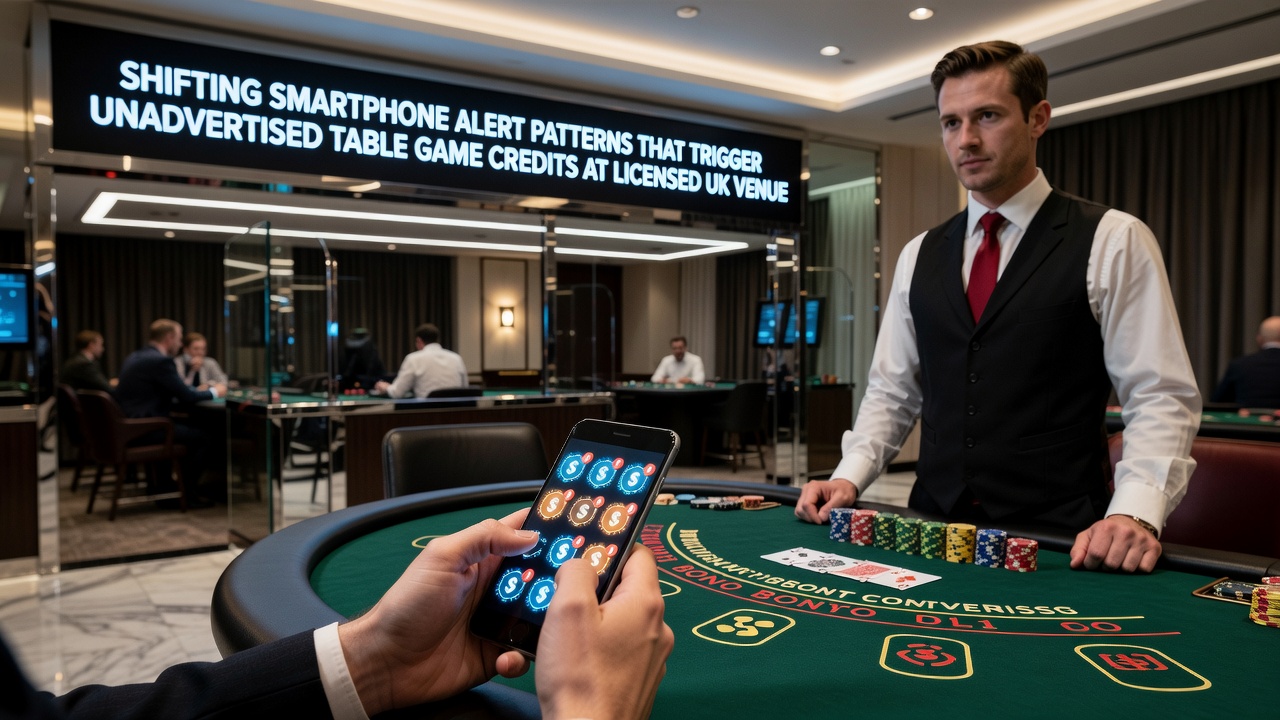
These patterns extend to notification grouping, where multiple messages arrive as a single bundled alert rather than separate pings. Bundling reduces user dismissal rates and correlates with credit grants appearing in table game wallets. Venues report that bundled alerts containing both a generic greeting and a subtle table icon generate the strongest response among players who previously engaged with live dealer content.
Regulatory Context and Cross-Border Comparisons
Licensed operators must maintain records of alert-driven credit distributions, yet these credits often fall outside standard marketing logs because they activate through backend triggers rather than public campaigns. Comparisons with systems in other regions highlight similar trends: Australian regulatory filings from the same period documented a parallel increase in notification-linked table rewards at state-licensed sites. The pattern suggests a wider industry movement toward device-responsive messaging that operates within existing compliance frameworks.
Technical audits conducted by third-party labs confirm that the underlying algorithms adjust delivery windows based on aggregate player cohorts rather than individual targeting, which keeps the process aligned with data protection standards. When a cohort reaches a threshold of table game rounds, the system releases credits to all devices in that group within a narrow time band, typically 15 minutes. This cohort-based method explains why some players receive alerts simultaneously while others in the same venue do not.
Player Response and Session Data
Session analytics from licensed venues indicate that players who interact with an alert within four minutes show extended table game play averaging 34 additional minutes compared with non-responders. The credits themselves usually range between £5 and £25 and apply exclusively to table products, excluding slots or instant-win games. Tracking services note that redemption occurs most often on European roulette and blackjack variants, with baccarat showing smaller but consistent uptake.
Venues have also adjusted alert visuals, incorporating subtle table felt textures or chip icons instead of bold promotional banners. These design choices maintain a low-profile appearance while still guiding users toward the intended sections. Aggregate figures from operator dashboards demonstrate that visual subtlety contributes to a 12 percent higher open rate than standard promotional graphics used in the same period.
Conclusion
Smartphone alert patterns continue to evolve at licensed UK venues, with timing, bundling and device signals shaping access to unadvertised table game credits. Data collected through mid-2026 illustrates consistent correlations between notification mechanics and table participation metrics across multiple sites. Regulatory comparisons from other jurisdictions reinforce that similar systems operate under established compliance structures, while technical audits confirm the cohort-driven nature of credit distribution. These developments reflect ongoing adjustments in mobile engagement strategies within the licensed sector.